The seller called in early March with a Brentwood bungalow — a 1958 post-and-beam on a flat street two blocks from the Sunday farmers market. The list price conversation was circling $2.95 million. Her agent wanted the house on the market in sixty days. Her question was direct: she had $50,000 and wanted to know what to do with it. Not in generalities. Not a "prioritize curb appeal" list from a real estate website. She wanted a scope, a sequence, and an honest answer about what comes back and what does not. That conversation is what this entry is.
The story most owners hear is that pre-sale improvements "return two to four times their cost." That number is approximately correct and entirely useless without knowing which improvements, in which sequence, in which price band, against which buyer pool. The sellers who spend the same $50,000 on the wrong scope come back to the table with receipts and a lower offer than the neighbor who spent $28,000 correctly. The question is never how much — it is where.
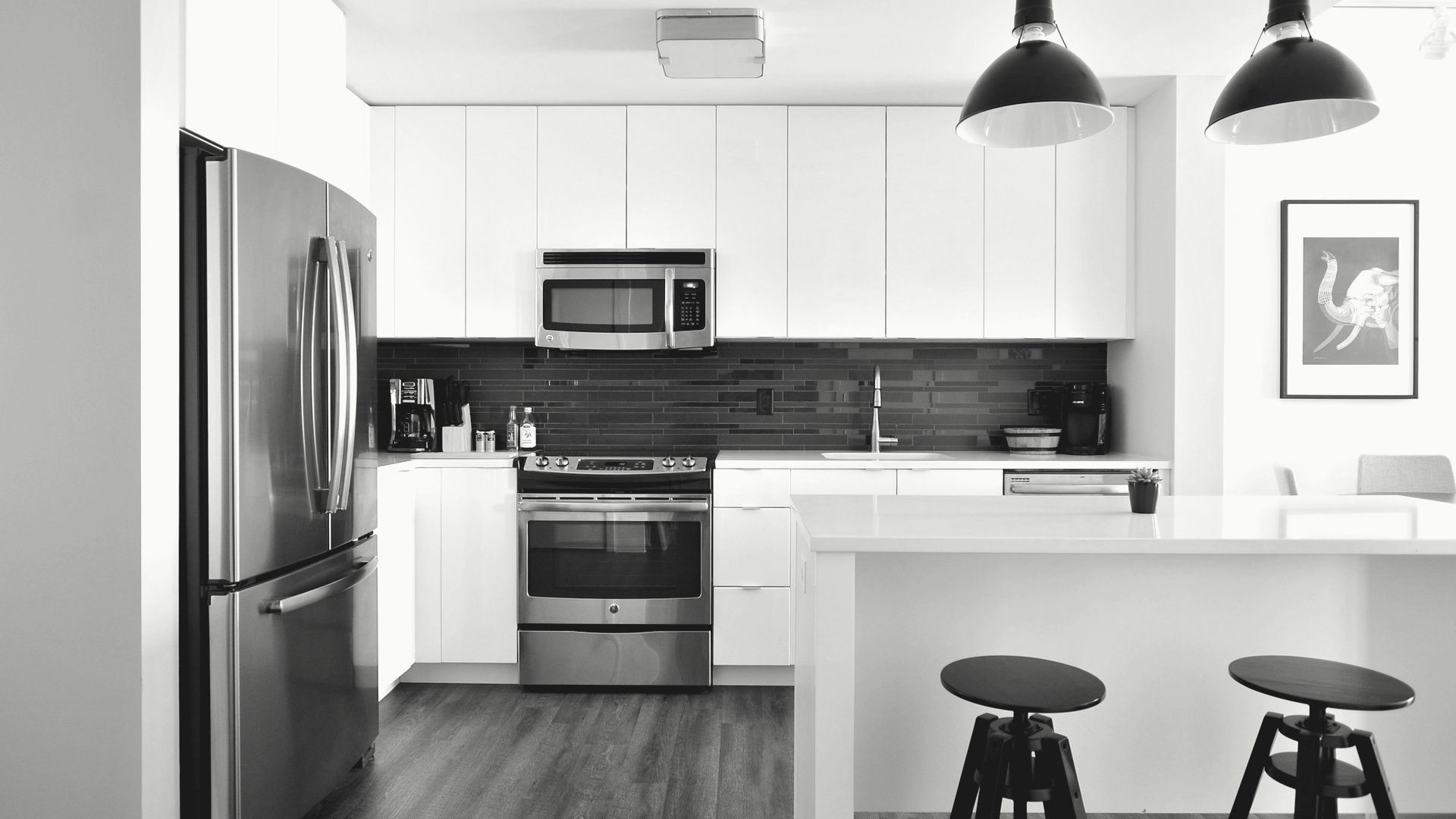
The kitchen the sellers loved is never the kitchen the buyers want. Paint it, hardware it, light it — and get out.— Field note, Brentwood listing prep, February 2026
Why fifty thousand is the right number.
In a $2–4 million West LA listing, the pre-sale improvement budget has a natural ceiling and a natural floor. Below about $20,000 you are doing single-trade cosmetics — paint or staging, not both — and leaving the mechanical and systems questions unanswered for the buyer's inspector to price against you. Above about $75,000 on a single-family home you start drifting into kitchen and bath remodels, which at West LA price points are donor projects: buyers in the $3 million range intend to personalize, and they discount a just-renovated kitchen that is not their taste rather than credit it.
Fifty thousand is the number that clears all of the observable defects, presents the property at its category ceiling, and leaves a $5,000–8,000 contingency buffer for inspection findings that would otherwise become negotiating chips. It is enough to do exterior and interior paint, address the kitchen and primary bath cosmetically without touching the structure, execute real landscaping, and pay for professional staging. It is not enough to add a bath, touch the roof, or do foundation work — and it should not try to be.
On a $2.95 million Brentwood listing, $50,000 deployed correctly returns an estimated $100,000–200,000 in final sale price versus the same property delivered as-is to the market. The math on that is a 2–4× return multiple on a ninety-day timeline. You will not find many investments that perform like that. The catch is that the return requires the right scope — which is the subject of the next section.
The line-item allocation.
Here is how we would allocate $50,000 on a representative $2.5–3.5 million West LA single-family home in 2026. These are ranges drawn from recent deliveries, not estimates from a contractor's brochure. The low end assumes favorable conditions: accessible walls, no deferred maintenance on the systems, a house that was reasonably maintained. The high end is what you actually spend when the building tells you the truth.
| Scope | Low | High | What drives the range |
|---|---|---|---|
| Exterior paint + prep | $8,000 | $12,000 | Surface condition, trim complexity |
| Interior paint — key rooms | $5,000 | $8,000 | Ceiling height, patch work required |
| Kitchen cosmetics (cabinets, hardware, lighting) | $5,000 | $8,000 | Number of doors, fixture count |
| Primary bath refresh (fixtures, regrouting, lighting) | $3,000 | $5,000 | Tile condition, fixture age |
| Landscaping + exterior presentation | $3,000 | $6,000 | Existing plant material, hardscape repairs |
| Professional staging | $5,000 | $10,000 | Square footage, duration on market |
| Systems — HVAC service, roof inspection, minor repairs | $2,000 | $3,500 | Age of equipment, deferred items |
| Contingency for inspection findings | $5,000 | $8,000 | Building age, prior disclosure history |
| Total | $36,000 | $60,500 | Target: $48,000–52,000 all-in |
A few observations on the table. First, the systems line — HVAC service and roof inspection — looks like a small number, and it is, but it is not optional. A buyer's inspector who finds an unserviced HVAC and a roof with deferred flashing will price that against you at four to five times the actual repair cost. Two thousand dollars in certification paperwork eliminates a ten-thousand-dollar negotiating deduction. That is the highest-return line item on the sheet.
Second, staging is not the same category as the other line items. It does not improve the physical property. What it does is compress time-on-market by a documented margin — staged West LA listings in the $2–4 million band average roughly 17 percent faster time-to-sale than non-staged comparables at the same price point. In a market where carrying costs on a $3 million property run $8,000–12,000 per month all-in, staging at $7,000 that saves three weeks on the market returns its cost before the first open house.
What the returns actually look like.
The return multiple on pre-sale work in West LA — the "2–4×" figure that gets repeated — is real, but it requires precision about which specific dollars are producing it. Not every line item returns equally.
The high-return category.
Exterior paint and curb appeal return at the high end of the range consistently. Buyers in the $3 million market form their price anchor before they walk through the front door, and that anchor is set by the street presentation. Fresh exterior paint and clean landscaping move the initial offer on a Brentwood or Beverlywood single-family by $20,000–40,000 on a $10,000 outlay. That is 2–4× before the interior is even opened. We have seen it on our own deliveries. It is the first check we write on every listing prep scope.
Interior paint in key rooms — the entry, the main living area, the primary bedroom — runs a close second. The return is harder to isolate because it is bundled with staging in buyers' perceptions, but a freshly painted interior eliminates the "needs updating" language from the agent's MLS notes, which is a discount category, not a preference. Cabinet painting and new hardware in the kitchen moves the kitchen from "dated" to "clean" without the full renovation timeline or spend, and buyers at this price point respond to clean. The return on a $6,000 kitchen cosmetic scope against a $3 million listing is not 2×. It is closer to 4–5×, because the alternative is a $20,000 price reduction in negotiation.
The honest middle.
The primary bath refresh — fixtures, regrouting, lighting — is a real return, but a more moderate one: roughly $8,000–15,000 back on a $4,000 investment in a well-executed scope. The condition has to be genuinely improved, not just cleaned. A regrout and new fixtures on a 1970s bath do not make it contemporary. They make it acceptable, which is a different and smaller win. Still worth doing at the price. Just do not budget it expecting the numbers the exterior delivers.
What to skip entirely.
Full kitchen remodels, bathroom additions, and any structural work are not pre-sale improvements in the $2–4 million West LA market. They are construction projects that delay the listing by three to six months, require permits that open the property to inspector scrutiny on adjacent items, and return fifty to seventy cents on the dollar when buyers discount your design choices rather than credit them.
The sellers in Bel Air who spent $85,000 on a kitchen remodel before listing at $4.2 million did not capture that spend in the sale price. The buyers saw a kitchen that was not quite their taste and proceeded to negotiate on every other item they found in inspection. The kitchen argument never materializes the way sellers expect it to, because at $4 million, buyers know they are buying the architecture, the land, and the address — not the appliances.
Skip any improvement that requires permitting with a lead time beyond four weeks, any structural repair that opens walls you do not need to open, and any finish specification that reflects the seller's taste rather than the category expectation of the buyer pool. Category expectation in Brentwood at $3 million is clean, neutral, and maintained — not custom and statement.
Sequencing the ninety days.
Ninety days is tight but workable if the trades are lined up before the first tool is swung. The sequencing failure we see most often is owners starting with the interior and leaving the exterior and landscaping until the end, which means the photography happens before the curb is right. Photography in West LA is not documentation — it is the listing's first impression for ninety percent of buyers. The sequence matters as much as the budget.
Days one through thirty: exterior paint, landscaping installation, systems service and certification, and any inspection-finding remediation. This is the work that requires the most lead time for material delivery and subcontractor scheduling. It is also the work that benefits from drying and settling time before photography.
Days thirty through sixty: interior paint, kitchen cosmetics, bath refresh, and all finish work. This phase can run in parallel across rooms with a coordinated crew, but it needs a single point of coordination to avoid the finish trades walking into wet paint or the cabinet painter arriving before the wall work is done.
Days sixty through ninety: staging, photography, final punch, listing. Three weeks is the right runway for staging install, photography in the right light, and agent review before the MLS date. Compressing this to two weeks is the mistake that produces the photos that look like someone moved furniture back in the morning of the shoot.
Three practical moves:
1. Write the scope before you call a contractor. The allocation table above is a starting point. Walk the property with the list and mark every item that is genuinely visible to a buyer in the first two minutes — those are the high-return dollars. Everything else is optional.
2. Get the systems certified first, before you price the cosmetic scope. An HVAC condition finding mid-project will reallocate your contingency and compress your timeline. Pull that risk forward. Service the equipment, get the inspection report, and know what you are working with before a painter shows up.
3. Lock the staging company before you start construction. Well-booked West LA staging operations are committed four to six weeks out. If you line up the stager after the paint is dry, you will wait, and the listing will slip. Call them on day one, confirm the date, and build the construction schedule backward from the staging install day.
Fifty thousand dollars on a $3 million West LA listing is not a marketing cost. It is a capital deployment with a documented return profile. Price it that way, sequence it correctly, and the arithmetic is about as clear as it gets in this business.
— End of Entry № 058 · Los Angeles, April 21, 2026