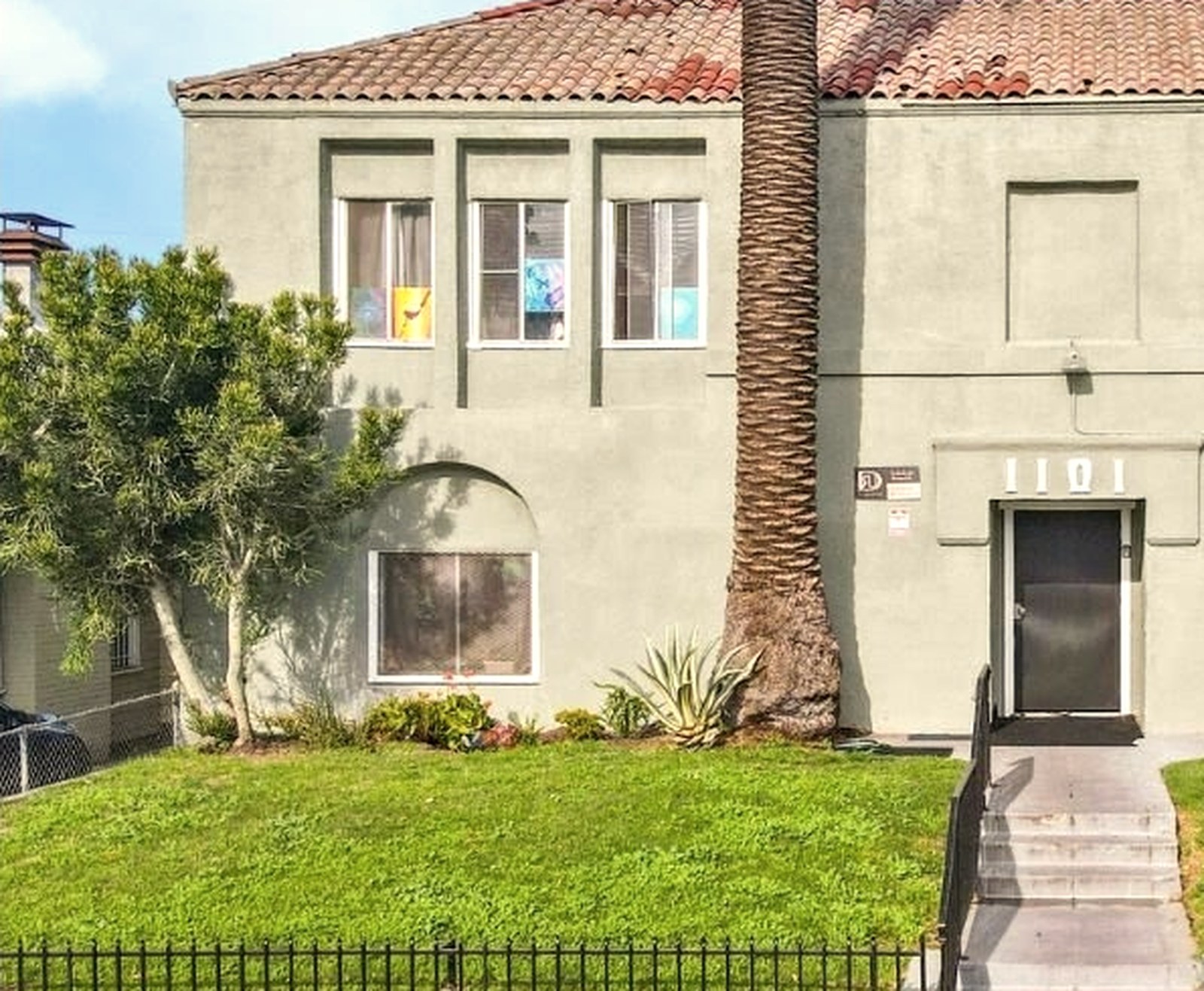
Taylor Avakian just closed a 20-unit at 1101 W 45th St in 90037 for $2,250,000. A 6.79% CAP, sub-7 GRM, under $200 a foot, $112,500 a door. This is an interesting sale and it's worth writing about because the numbers are clean and line up tight. In a year where most LA multifamily deals need a proforma to make sense, this one makes sense on the actual income.
Why this one caught my eye
Almost a 7 cap. That matters in this environment. A 6.79% CAP on a trade that closed this April, in a market where most sub-$5M deals have been penciling at 5.5 to 6.5% current, means this asset was priced to actually transact, not priced to hope.
Sub-7 GRM confirms the CAP is believable. When GRM and CAP disagree, one of them is wrong. When GRM is under 7 and CAP is 6.79%, the broker, the seller, and the market roughly agree on what this building does. That tells me the pricing is clean.
Under $200 a foot. For 20 doors. $112,500 per unit. These are basis numbers, not yield numbers, and they work at a different level. Replacement cost for anything that looks like this, two-story Spanish-tile-roof multifamily, is somewhere between $300 and $400 a foot all in with land. Buying the bricks at sub-$200 means the income is almost a free option on top of a basis that is already defensible on the bricks alone.
The numbers, honestly
Let me run the math so the reader can do the same.
| Metric | Value |
|---|---|
| Sale Price | $2,250,000 |
| Stated CAP | 6.79% |
| Implied NOI (from CAP) | $152,775 |
| Implied Gross (sub-7 GRM) | ~$321,000 |
| Implied Monthly Rent / Unit | ~$1,338 |
| Price / Door | $112,500 |
| Expense ratio (back-into) | ~52% |
A 52% expense ratio is on the high side for a well-run 20-unit building. My read, and it is a read, not a claim, is that the prior operator was probably running a thicker management overhead than the asset needs, paying individual-policy insurance, and absorbing deferred maintenance as it came. A disciplined operator with a portfolio to roll this into can probably take the expense ratio to 42 to 45% inside two years. If that happens, the going-in CAP climbs toward 7.5% on the same purchase price, without a single rent increase.
I would have bought this at $2.25M. That is the number. Could you have pushed it to $2.1M with a harder counter? Maybe, and maybe you lose the deal. The flyer is clean on the stated CAP and GRM, and Taylor runs a tight OM, but one thing I always ask about on a 1920s 20-unit that is not spelled out in public collateral is the soft-story status, the trailing twelve expense line, and the roof age. Those are the three items that can move an expense stack 3 to 5% in year one, and they are the normal ones to check before a hard money deposit, not after.
The implied rent of around $1,338 a month is on-market for 90037 and consistent with what LA RSO buildings in this ZIP have been running for one-bed and small two-bed units. Since this is a 1920s build it falls under LA RSO, which caps increases. The new owner is not going to push rents 4% a year here. They are going to have an annual cap of 1-4% indexed to 90% of CPI. This is one of the reasons the starting cap rate is close to 7.
This is a long-term hold. Not a flip. Not a value-add with a two-year exit. It is income and basis, and you buy these with the intent of owning them for a decade or longer and using the income to pay off the debt.
About 90037
The property sits in Historic South Central, a part of LA that is heavily Latino and very densely populated, with a population density that ranks among the highest in the city and the county. The neighborhood is predominantly made up of small to medium apartment complexes, which is exactly the product type we are looking at here. These buildings are old. Most of them are pre-1950. The median build year for homes in the broader Historic South Central corridor is 1907, per local guides.
This matters for an owner for a few reasons.
One, the supply is fixed. Nobody is building new 20-unit stucco multifamily in 90037 because the land economics don't support it and the entitlement environment doesn't either. What's there is what's there. The existing stock absorbs the demand, and the demand in South LA is deep and consistent. Especially where many operators have converted these buildings to primarily being section 8 tenants and increasing their rents massively. This is where a $1350 one bedroom can go for around $1900-2100.
Two, tenants stay. Historic South Central has one of the highest renter-occupied ratios in LA, and turnover is lower than you would expect. This is a working class, multi-generational neighborhood. People don't bounce between apartments every 11 months the way they do in Hollywood or Koreatown. A stable rent roll also means there isn't a 3-5% vacancy factor and that can also increase this owners cap rate.
Three, LA is changing. USC expansion, the Expo Line, Banc of California Stadium, the Lucas Museum further south, and a steady push from downtown all push toward this corridor. I am not saying 90037 is about to become Silver Lake. I am saying that a 20-unit at $112,500 a door is a solid cash flowing product and is what a lot of investors enjoy especially if they are financing at 5.5% and getting the cash on cash closer to 9%.
For context, the 1825 N Gramercy trade we covered last week closed at $187 a door in Hollywood, a different ZIP, a different vintage, and a different operator thesis. Gramercy is a basis-and-patience bet on Hollywood eventually catching up. 1101 W 45th is the inverse, an income-and-basis bet on a ZIP that is already working the way the operator needs it to work. Two honest trades, two different plays. Both cleared at numbers that made sense to the buyer on day one. That is the pattern this cycle, disciplined sub-$5M trades on older LA stock where the basis is the thesis, not the proforma.
The broker, Taylor Avakian
The deal was listed and closed by Taylor Avakian. Taylor is founder of The Group CRE and is also 1st VP at Lyon Stahl Investment Real Estate. He has closed over $200M in LA multifamily deals since he started in 2018, which is a pace that most brokers don't hit in a full career. This guy is a hard working individual that I have met and talked to many times, he is real and authentic.
I'm writing about him because he is one of the upcoming and growing brokers I see dominating the LA landscape right now. He's driven, ambitious, and works hard to get deals done for both sides of the trade. He knows the market. He's not hallucinating on values. He understands the upside and the downside and what it means for the long-term holder. That combination is rare. Most brokers push a number. Taylor prices a number and lets the deal find it.
He's also one of the voices advocating for LA to turn around and become a growth city again, and he's doing something about it. He hosts No Vacancy, a weekly podcast where he interviews top LA multifamily investors and operators. It's sitting at a 5.0 rating on Apple Podcasts with serious guests on it, last I checked. Worth listening to if you own apartments in this city or are thinking about it.
We'll be tracking more of Taylor's offerings and sales going forward.
Taylor Avakian
- Emailtaylor@lyonstahl.com
- Firm Sitelyonstahl.com/team/taylor-avakian
- LinkedInlinkedin.com/in/tayloravakian
- PodcastNo Vacancy, Apple Podcasts
- FocusLA multifamily, acquisitions, dispositions
- Tracked byAtlas Brief, April 2026
Takeaway for owners
If you own 20 to 40 units in 90037, 90011, 90007, or anywhere in the Historic South Central corridor, this trade is a comp you should be paying attention to. $112,500 a door at a 6.79 CAP resets the conversation for what your building might be worth to the next buyer. That number could work for you as a seller if you're ready to exit, and it could also work against you if you're expecting 2022 pricing.
If you're a buyer sitting on cash looking for yield in LA, this is the kind of product that's getting bought this year. Not trophy Hollywood deals at 4-cap. Not value-add West Adams at 5-cap on a proforma. Solid income-producing 1920s multifamily in the 90037, 90011, 90044 corridor at a 6.5 to 7 cap. That's the deal that works today at current rates.
And if you want to talk about your building honestly with someone who isn't trying to list it or buy it, you know where to reach me. If you want to talk about listing it, Taylor is one of the brokers I would call.