How Often Should You Repaint Your LA Home? Interior vs. Exterior
LA's UV exposure eats exterior paint faster than almost anywhere in the country. Here's the honest timeline for interior and exterior repainting — and what affects it.
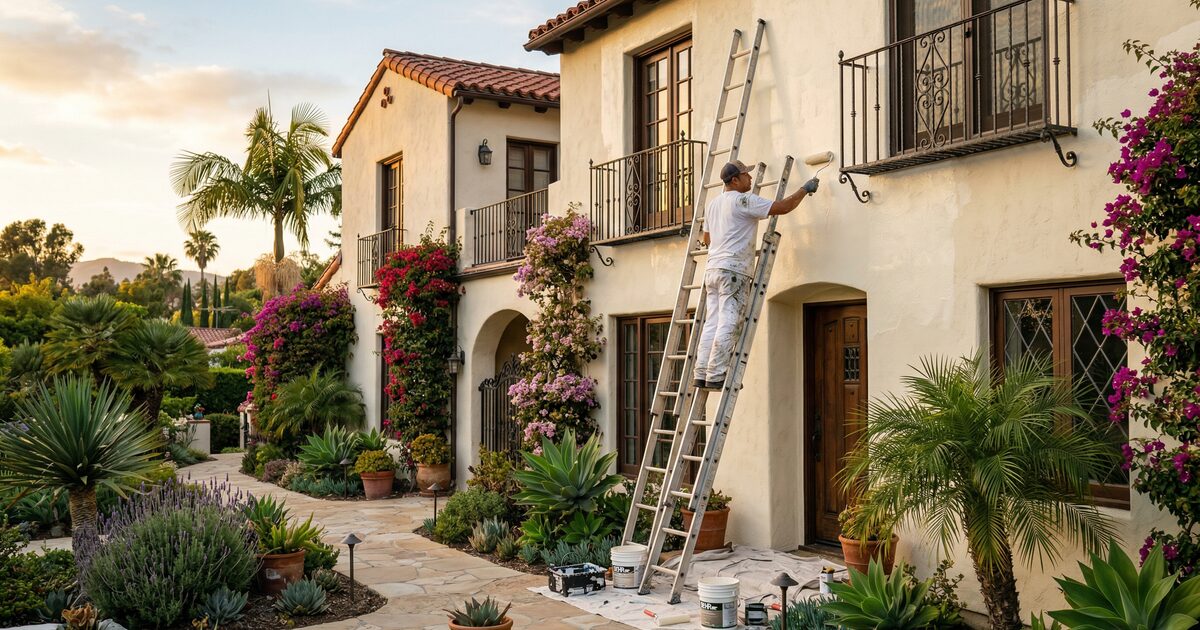
Los Angeles is one of the hardest cities in America on exterior paint. Over 280 days of direct sunlight per year, UV indices that regularly hit 10+, temperature swings from 50°F to 100°F, and — for coastal neighborhoods — salt-laden air that accelerates fading and chalking. The result: exterior paint in LA degrades 30–40% faster than in moderate climates. Knowing the real repaint timeline saves you from both premature spending and costly delayed maintenance.
Exterior Repaint Timeline by Surface
Not all surfaces age at the same rate. Stucco (the most common exterior surface in LA): 7–10 years with quality paint, 4–6 years with builder-grade. Wood siding: 5–7 years, less on south and west-facing walls. Trim and fascia: 4–6 years — these take the most direct UV and moisture exposure. Front door: 2–3 years for a south-facing door in direct sun. Garage door: 5–7 years. These are guidelines for quality paint and proper prep. Cheap paint on bare stucco with no primer? You'll see fading and chalking in 2–3 years.
We use exclusively Dunn-Edwards paint on every project — it's formulated for Southern California's UV exposure. Combined with proper primer application, our exterior paint jobs are built to last 8–10 years, not 4–5.
Interior Repaint Timeline
Interior paint lasts significantly longer because it's protected from UV and weather. General guidelines: Living rooms, bedrooms, hallways: 7–10 years. Kitchens and bathrooms: 4–6 years due to moisture, grease, and more frequent cleaning. High-traffic areas (entryways, kids' rooms): 3–5 years. Ceilings: 10–15 years unless there's water damage. The biggest factor for interior paint longevity isn't the paint itself — it's the prep work. Walls that are properly cleaned, patched, primed, and painted last twice as long as a quick coat over existing issues.
5 Signs It's Time to Repaint Now
Don't wait for the calendar — watch for these signs: 1. Chalking — run your hand across the surface; if white powder comes off, the paint's UV protection is gone. 2. Fading — particularly on south and west-facing walls, colors lose vibrancy. 3. Cracking or flaking — this means moisture is getting behind the paint film. 4. Bubbling — trapped moisture or heat is pushing the paint off the substrate. 5. Mildew or dark spots — especially on north-facing walls and shaded areas. If you see bare substrate (raw stucco, wood, or metal), the paint has completely failed and you need to act quickly before moisture damage sets in.
| Area | Timeline | Key Factor | Cost Range |
|---|---|---|---|
| Exterior stucco | 7–10 years | UV / sun exposure | $4,500–$9,000 |
| Exterior trim/fascia | 4–6 years | Direct sun + moisture | $800–$2,000 |
| Interior living spaces | 7–10 years | Traffic + wear | $2,500–$5,000 |
| Kitchen/bathrooms | 4–6 years | Moisture + cleaning | $1,200–$2,500 |
| Front door | 2–3 years | South-facing UV | $200–$400 |
| Cabinets | 10–15 years | Quality of initial job | $3,000–$7,000 |
The difference between a 5-year paint job and a 10-year paint job isn't the paint — it's the prep. Skipping primer, painting over dirty surfaces, or ignoring cracks saves a day of labor and costs you a full repaint 5 years early.
Time to repaint your LA home?
Free color consultations and estimates. We use exclusively Dunn-Edwards paint with proper primer for long-lasting results.