Navigating Insurance Claims for Water and Fire Damage in West LA
The single most common mistake homeowners make after a damage event is not calling their insurer immediately. Here's the process that protects your claim.
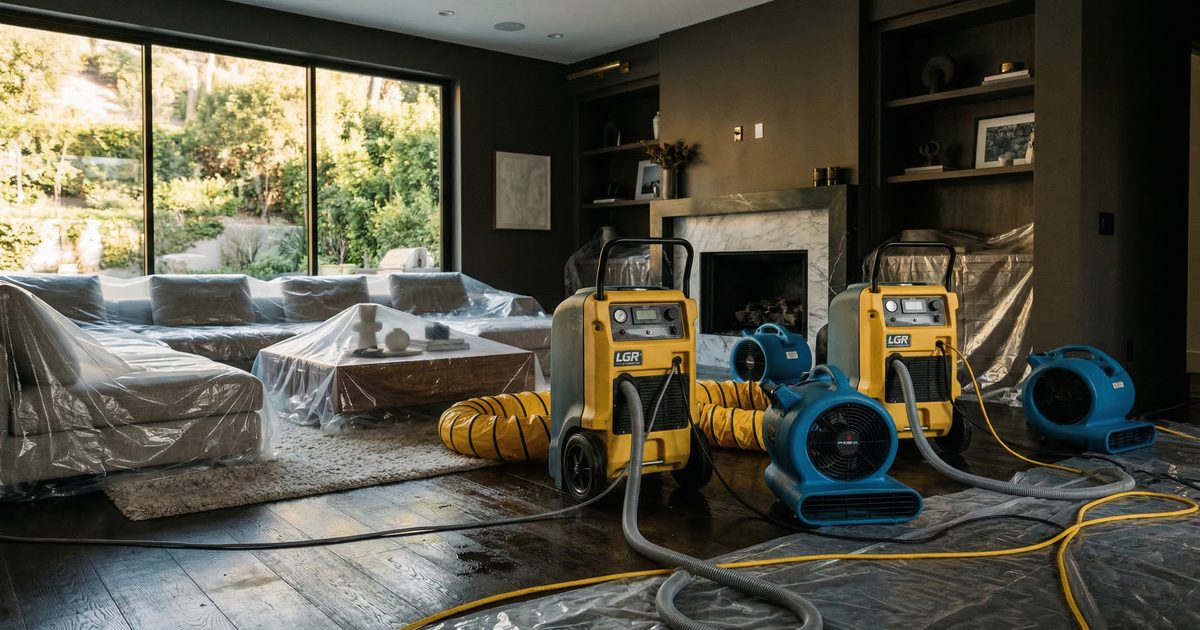
Filing a successful insurance claim after water damage, fire damage, or mold remediation requires understanding the claims process, documenting correctly from the first moment, and working with restoration contractors who know how to interface with insurance adjusters. Getting this right can mean the difference between a fully covered loss and a significant out-of-pocket expense.
Document Before You Clean Anything
The most common insurance mistake homeowners make is beginning cleanup before damage is fully documented. Insurance adjusters and independent assessors need to see the original damage condition to properly scope a claim. Before any water extraction, demolition, or cleaning begins, photograph and video everything: the source if visible, all affected areas, water lines, material conditions, and any visible damage. Time-stamp everything. This documentation is your claim.
How Insurance Adjusters Work — and What They Often Miss
Insurance adjusters represent the insurance company's interests. An adjuster's initial scope estimate is frequently incomplete — particularly for hidden damage in wall cavities, secondary structural damage, and materials that aren't immediately visible. A public adjuster represents your interests and typically identifies significantly more covered scope than the initial insurance estimate. For any claim over $10,000, engaging a public adjuster is worth serious consideration.
Working With Restoration Contractors on Insurance Claims
Restoration contractors experienced with insurance work understand how to document scope in a format that aligns with insurance reimbursement schedules. They use Xactimate — the industry-standard estimating software that most insurance companies use internally — which facilitates direct claim submission and reduces disputes. When selecting a restoration contractor for an insurance claim, ask specifically about their insurance claim experience and Xactimate capability.
Report your claim to your insurer within 24 hours of discovery. Most policies have prompt reporting requirements. Delayed reporting gives insurers grounds to reduce or deny coverage — even on legitimate claims.
An insurance company that pays your premium for 10 years and then underscopes your claim by $30,000 is not acting in bad faith — it's acting in its own interest. Understanding this is what protects your recovery.
| Step | Timing | Who Does It |
|---|---|---|
| Document everything | Immediately | Homeowner — photo and video |
| Report to insurer | Within 24 hours | Homeowner |
| Initial adjuster inspection | 2–5 days | Insurance company adjuster |
| Restoration scope and estimate | Day 1–3 | Restoration contractor |
| Claim resolution | 2–8 weeks | Insurer + adjuster |
Dealing with an insurance claim for damage?
Atlas works directly with insurers using Xactimate documentation. We protect your claim from the first call.