How to Tell If Your Roof Has Storm Damage (And What to Do Next)
LA's rain season is over, but the damage it left behind may not be obvious. Here's what to look for and when to call a professional.
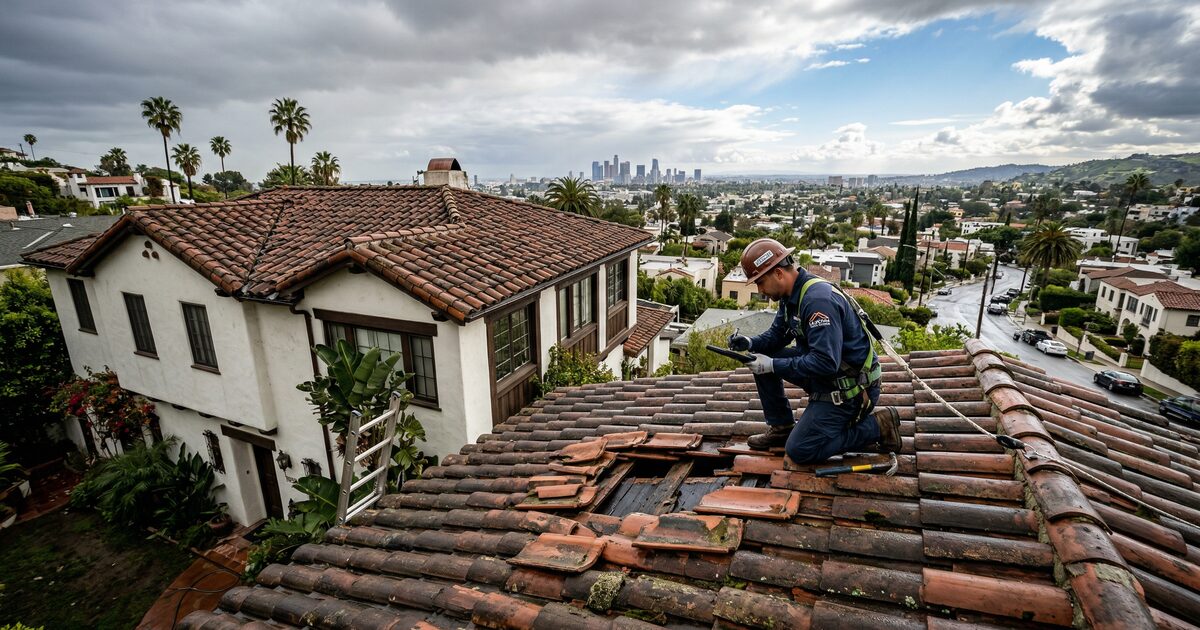
Los Angeles gets roughly 80% of its annual rainfall between November and March. When April arrives and the rain stops, most homeowners assume they're in the clear. But storm damage to a roof is often invisible from the ground — and the problems it creates don't show up until months later, when a small leak has turned into drywall damage, mold growth, or structural rot that costs 10x what the original repair would have.
What Storm Damage Actually Looks Like on LA Roofs
LA homes primarily have two roof types: composition shingle (asphalt) and clay or concrete tile. Each shows storm damage differently. On composition shingles: look for missing or lifted shingles, dark streaks where granules have washed away, cracked or curling edges, and exposed underlayment or decking. On tile roofs: look for cracked, chipped, or displaced tiles, broken mortar at ridge lines, and debris accumulation in valleys. On flat roofs (common on mid-century LA homes): look for ponding water that hasn't drained 48 hours after rain, bubbles or blisters in the membrane, and cracks in the parapet walls.
The Ground-Level Inspection You Can Do Today
You don't need to climb your roof — and you shouldn't, especially on tile roofs where walking causes damage. From the ground with binoculars, check for: missing or visibly shifted materials, flashing damage around chimneys, vents, and skylights, sagging or uneven roof lines (this suggests structural issues), and debris or vegetation buildup in gutters and valleys. Inside, check ceilings for new water stains, discoloration, or peeling paint. Check the attic (if accessible) with a flashlight for daylight showing through the roof, damp insulation, or water marks on rafters.
New water stains on your ceiling don't always mean a roof leak. They can also indicate a plumbing leak above, condensation from poor attic ventilation, or AC drain overflow. A professional inspection identifies the actual source — don't assume and don't ignore it.
Insurance Claims: What LA Homeowners Need to Know
Most homeowner's insurance policies cover storm damage to roofs — but the process matters. Document everything with photos before making any repairs. File the claim promptly; most policies have a window (often 1 year) from the date of the storm. Get a professional inspection and written report — insurance adjusters take contractor assessments seriously. Don't sign anything from a 'storm chaser' roofing company that shows up at your door; they often inflate claims and leave you liable.
| What You See | Likely Cause | Urgency | Action |
|---|---|---|---|
| Missing shingles/tiles | Wind damage | High | Repair within 2 weeks |
| Water stains on ceiling | Active leak | Urgent | Call immediately |
| Granules in gutters | Normal wear or hail | Medium | Schedule inspection |
| Sagging roof line | Structural damage | Urgent | Professional assessment ASAP |
| Clogged gutters/valleys | Debris buildup | Medium | Clean and inspect |
| Flashing pulled away | Wind or thermal movement | High | Repair before next rain |
The best time to inspect your roof is after the last rain of the season — not after the first rain of the next one. By then, six months of hidden moisture damage has already happened.
Worried about roof damage after this season?
Free roof inspections across West LA. We'll tell you exactly what needs attention — and what doesn't.