What Are Those Brown Spots on My Ceiling? A West LA Homeowner's Guide
Brown ceiling stains have five possible causes. Only one is benign. Here's how to tell them apart — and why acting quickly on the others matters.
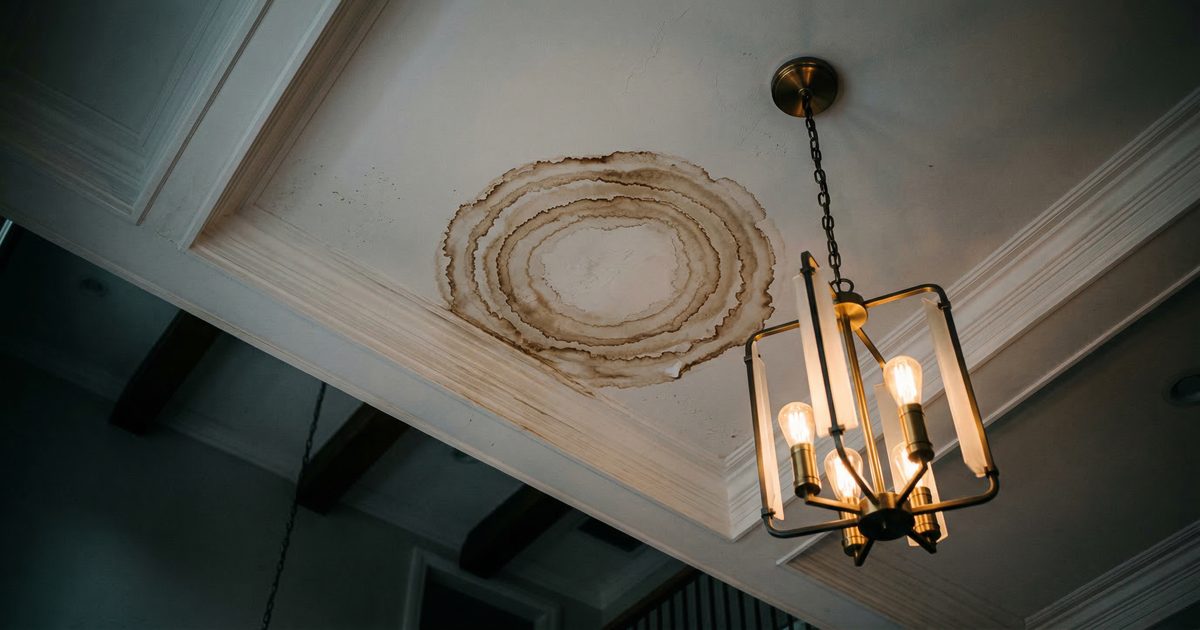
A brown stain on a ceiling is one of the most common — and most ignored — signs of a developing home problem. Homeowners frequently chalk them up to old water damage, paint discoloration, or 'something that already got fixed.' Sometimes they're right. More often, they're not. Here's how to tell the difference.
The Five Possible Causes
Brown ceiling stains come from: active roof leaks (water traveling from roof to drywall), plumbing leaks from fixtures above (toilet wax ring failure, supply line drip, drain issue), HVAC condensate overflow (a clogged condensate drain backing up into the pan and overflowing), old water damage that was dried but not fully remediated, or — least common but important to rule out — mold growth in a wet cavity behind the drywall. The distinction between 'old' and 'active' is the most important diagnostic question.
How to Tell Old from Active
Press the center of the stain gently. Soft or spongy drywall indicates active or recent moisture. Hard and firm drywall is likely old and dry. Hold a moisture meter to the surface (available at any hardware store for $25) — a reading above 16% moisture content indicates active or residual moisture. Check during or immediately after rain: does the stain expand or darken? If yes, the source is rain-connected. Does it grow regardless of rain? The source is plumbing or HVAC.
Why You Should Never Just Paint Over It
Painting over a water stain hides the discoloration but does nothing about the cause — and if the cause is active, the stain reappears through the new paint within weeks. More importantly: if the moisture source is active, mold colonization may already be occurring behind the drywall. Painting over that situation delays the remediation and makes it worse. The correct sequence is always: identify and fix the source, dry completely, verify, then repair and paint.
A ceiling stain that doubles in size after rain is an active event that should be addressed within 24–48 hours — not at your convenience. Water traveling through a roof into your home doesn't stop because it's inconvenient.
A brown spot on the ceiling is information. Ignoring it is a decision — just usually not a good one.
| Pattern | Most Likely Source | First Call |
|---|---|---|
| Appears/grows during rain | Roof leak | Roofing contractor |
| Appears above kitchen/bath | Plumbing leak above | Plumber |
| Appears near HVAC supply | Condensate overflow | HVAC technician |
| Multiple soft spots + musty smell | Active mold + moisture | Restoration company |
| Hard, old, non-growing | Previous event (likely resolved) | Monitor — repaint when confirmed dry |
Ceiling stains in your West LA home?
Multi-trade diagnosis — we identify whether it's roofing, plumbing, HVAC, or restoration. One call.